← Back to work

My first corporate product role / NCRI / 2020–2021

Keep the case together.

At NCRI, I designed an operating platform to move a debt collection case from intake to recovery without losing its calls, evidence, payments, ownership, or next action between tools.

View the design work
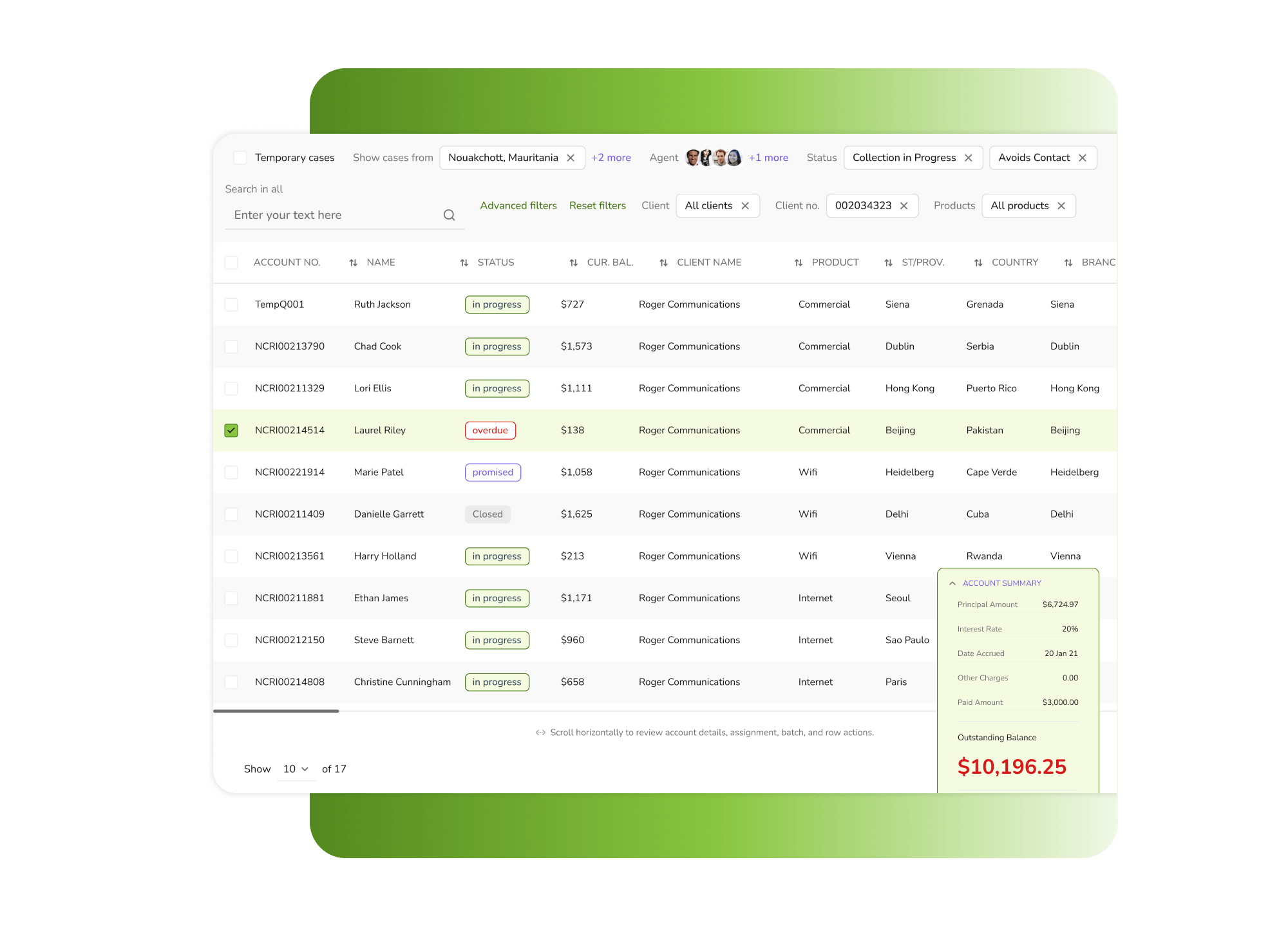
NCRI debt collection platform hero showing the accounts data grid, filters, progress states, and account summary.

Case continuity

The interface was only part of the problem.

TODAY'S WORK

What needs attention.
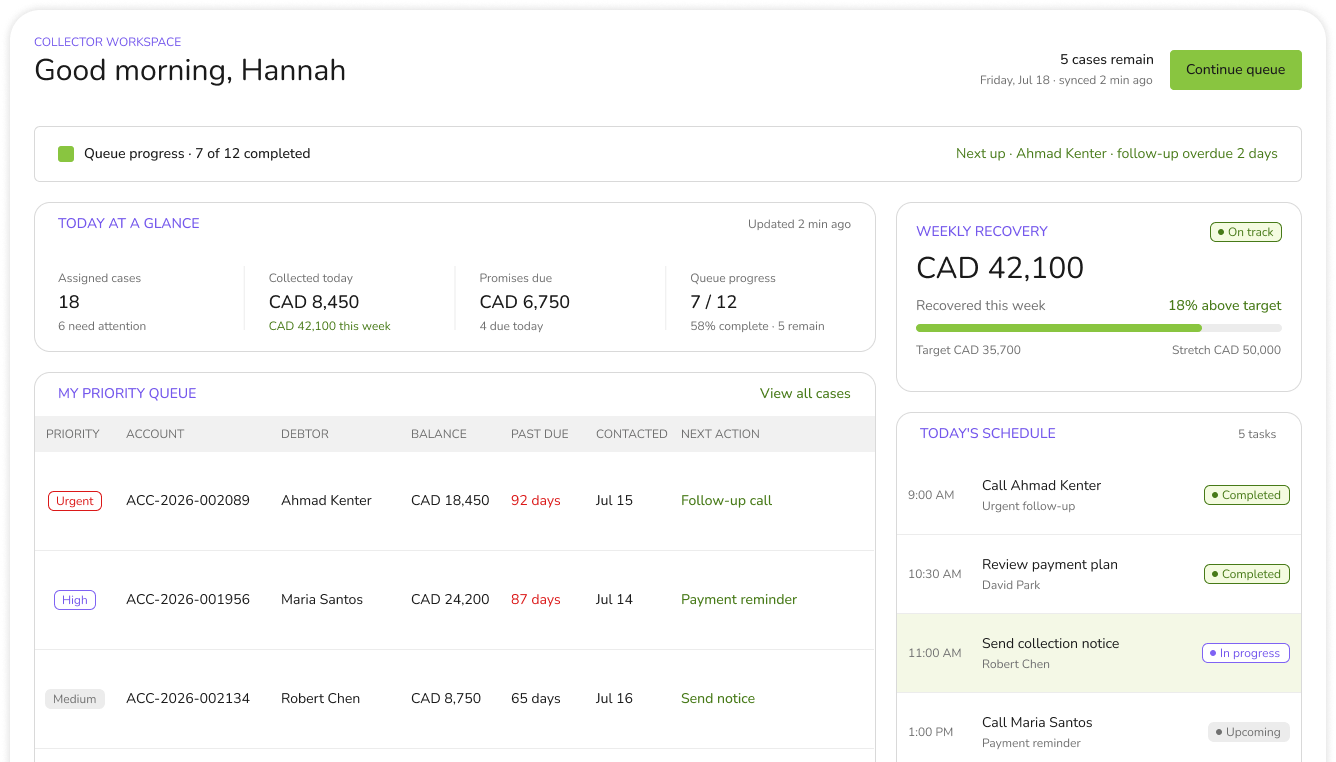
NCRI collector dashboard showing today's schedule, priority queue, weekly recovery, and next commitment.
ONE CASE · ONE MEMORY

Progress stays with the case.

NCRI case overview showing account details, payment progress, and linked case information.
WORK TO MONEY

Collections can be traced.

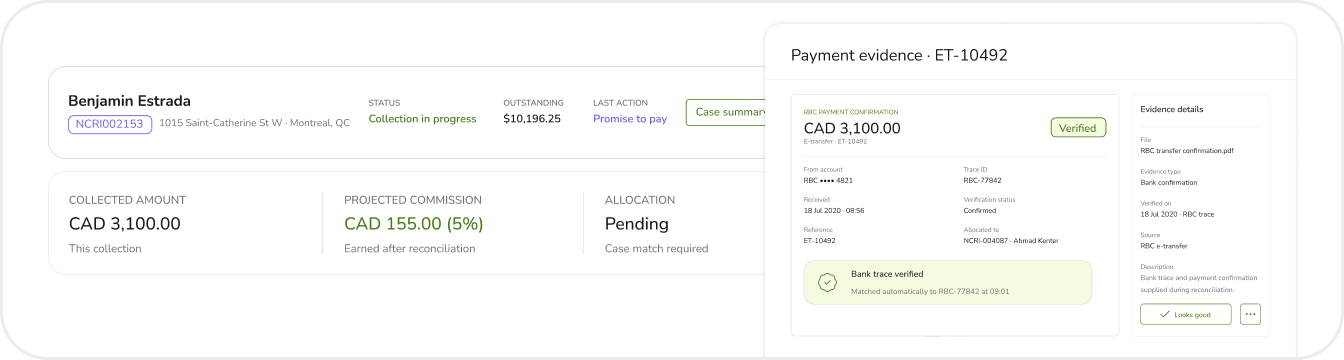
NCRI financials view showing payment evidence and account financial details.
Role
Product design, research, UX/UI, design system, prototype
Engagement
Cross-functional work with collection teams and stakeholders
Product
Debt collection operating platform
Year
2020–2021

It started in one room

The workflow was spread across four tools.

My first brief at NCRI was wonderfully direct: the desktop app sometimes worked and sometimes did not. Collectors used spreadsheets, calls sat in a separate VoIP tool, and managers relied on reports that arrived after the work.

The challenge was bigger than replacing one screen. We needed an in-house system that could import cases, assign work, keep follow-ups together, connect call evidence, and give managers a current view without losing the detail behind it.

I started by following a case through the existing workflow. That made the handoffs, repeated work, and missing context much easier to see than a feature list would have.

A discovery session with collection stakeholders working through the workflow around a shared table.
The first useful map came from walking through the work together.
01

Desktop app

Collectors worked the case here, but it did not show the whole operation.

02

VoIP

Calls happened beside the case, which made the outcome easy to lose.

03

CSV files

Teams used files to keep work moving when the product could not.

04

Power BI

Managers could see reports, but not always the live case behind them.

Following the real workflow

The same case moved differently in each team.

I followed the workflow with teams in Bahrain, Canada, and Pakistan. Each had adapted around the same gaps, so I carried one question through every review: what does the next person need to continue this case?

BH

Bahrain

Collection operations

The question I kept asking

How does a collector decide what to do next?

Workflow walkthroughPrototype reviewFollow-up discussion
CA

Canada

Collection team

The question I kept asking

What has already happened on this case?

Workflow walkthroughPrototype reviewFollow-up discussion
PK

Pakistan

Collection team

The question I kept asking

Where should the call evidence live?

Workflow walkthroughPrototype reviewFollow-up discussion

What the product needed to solve

Role / Stakeholder

The operating picture arrived through exports and reports, which made it hard to see an issue while it was still unfolding.

Design response

Connect the summary to current case detail.

Role / Debtor

The account needed to explain what was due, what had already been paid, and which action was available next.

Design response

Create a clear self-service account and payment path.

Role / Collection agent

Case details, earlier contact, promises, and the next call were spread across too many places.

Design response

Put the queue and the full case history together.

Role / Collection manager

Stalled cases and uneven workloads were difficult to notice early enough to help.

Design response

Make ownership, urgency, and progress visible.

Role / QA manager

Reviewing an interaction meant rebuilding the story from call recordings, case details, and separate notes.

Design response

Keep call evidence attached to the case activity.

Role / IT admin

Imports became fragile when client files changed or fields no longer matched the expected structure.

Design response

Make mapping and validation states explicit.

The shared need

Across roles, the same need kept returning: show me what is happening now, what happened before, and what I need to do next.

Three views of the same case

The same record had to answer three different questions.

I reviewed the model from three sides: the person collecting, the person paying, and the people responsible for the wider operation.
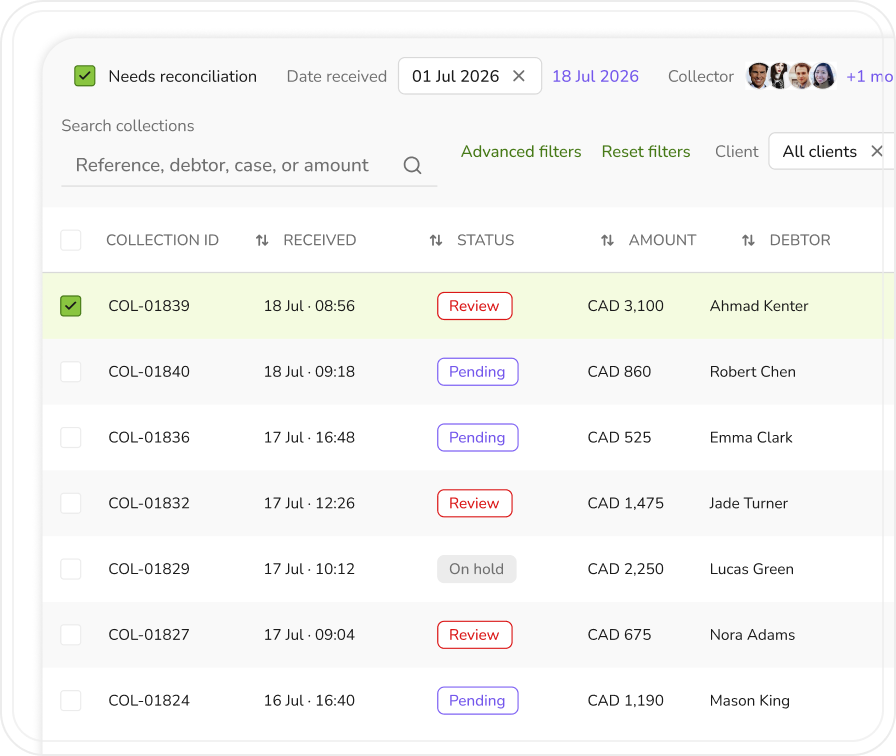
01Collection agents
NCRI collections data grid showing reconciliation state, filters, collection IDs, status, amount, and debtor.

Can I pick up the case and know what to do next?

The case keeps activity, evidence, commitments, and the next call together so another agent can continue the work.
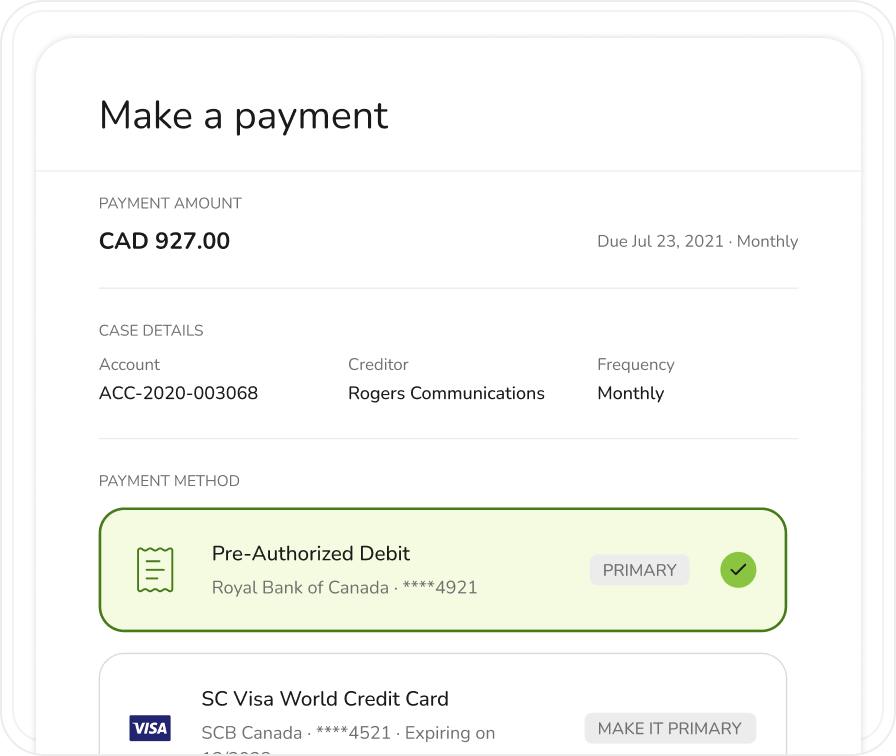
02Debtors
NCRI make-a-payment modal showing payment amount, case details, and available payment methods.

Can I understand the account and make the next payment?

The portal gives the debtor a clear place to sign in, recover access, and continue with the account instead of leaving the payment path ambiguous.
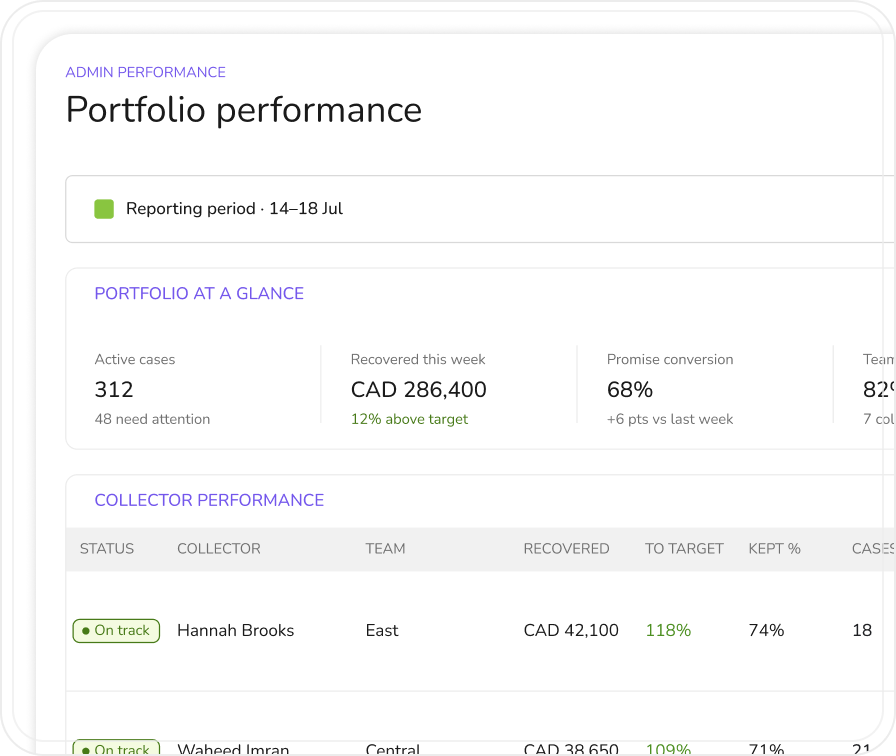
03Stakeholders
NCRI admin performance dashboard showing portfolio metrics, team performance, and cases needing attention.

Can I see where the operation needs attention?

The dashboard turns live case movement into a view for deciding what needs attention, without losing the detail behind the numbers.

These are design reviews from the project material. I do not have recorded completion rates or business results for this work.

What changed after review

The useful details came from watching the work.

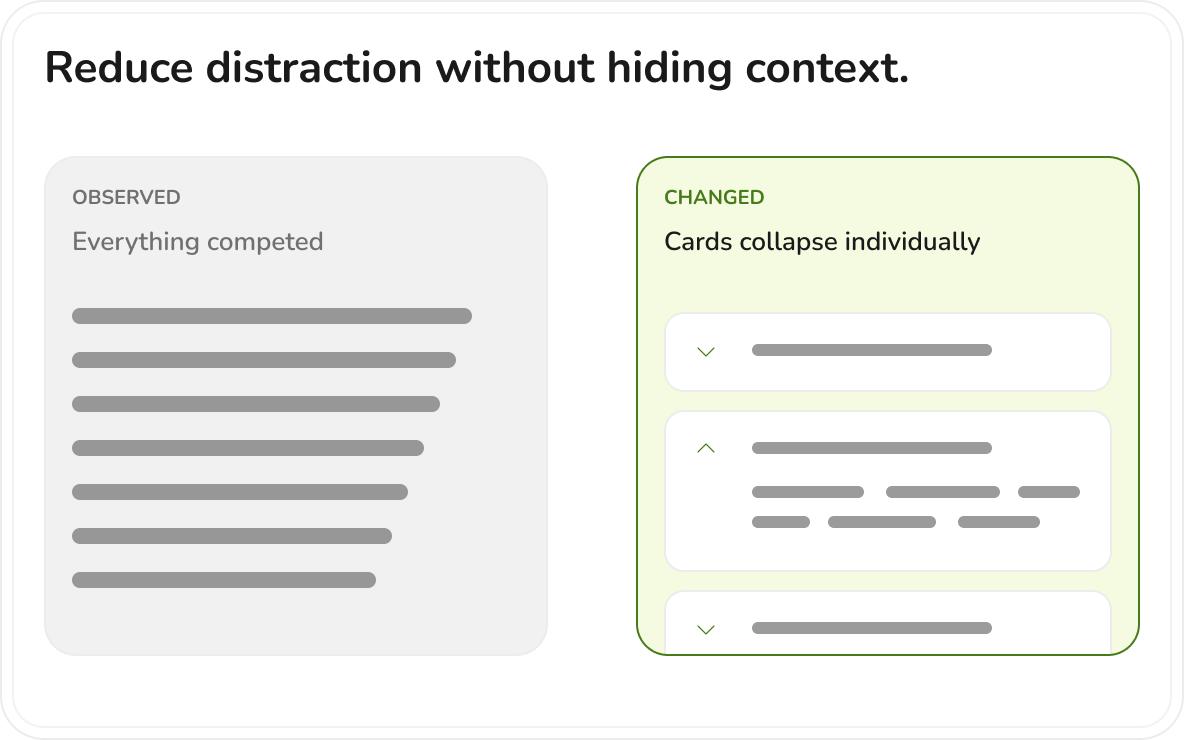
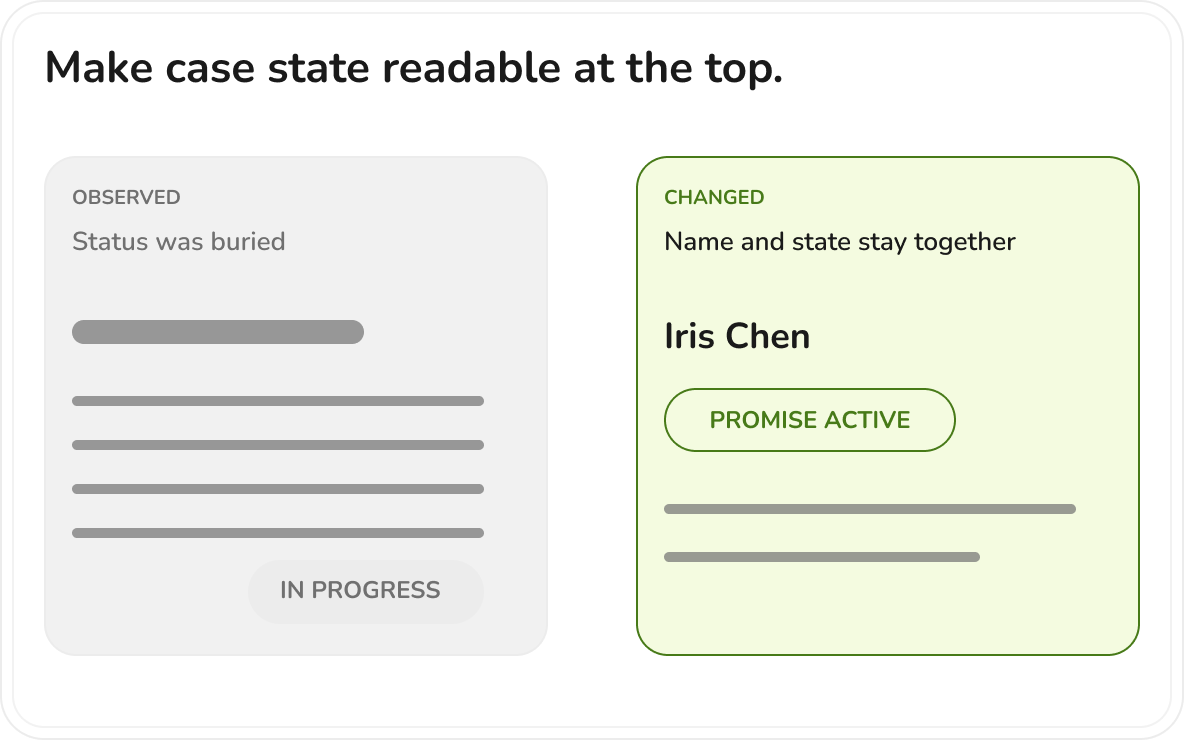
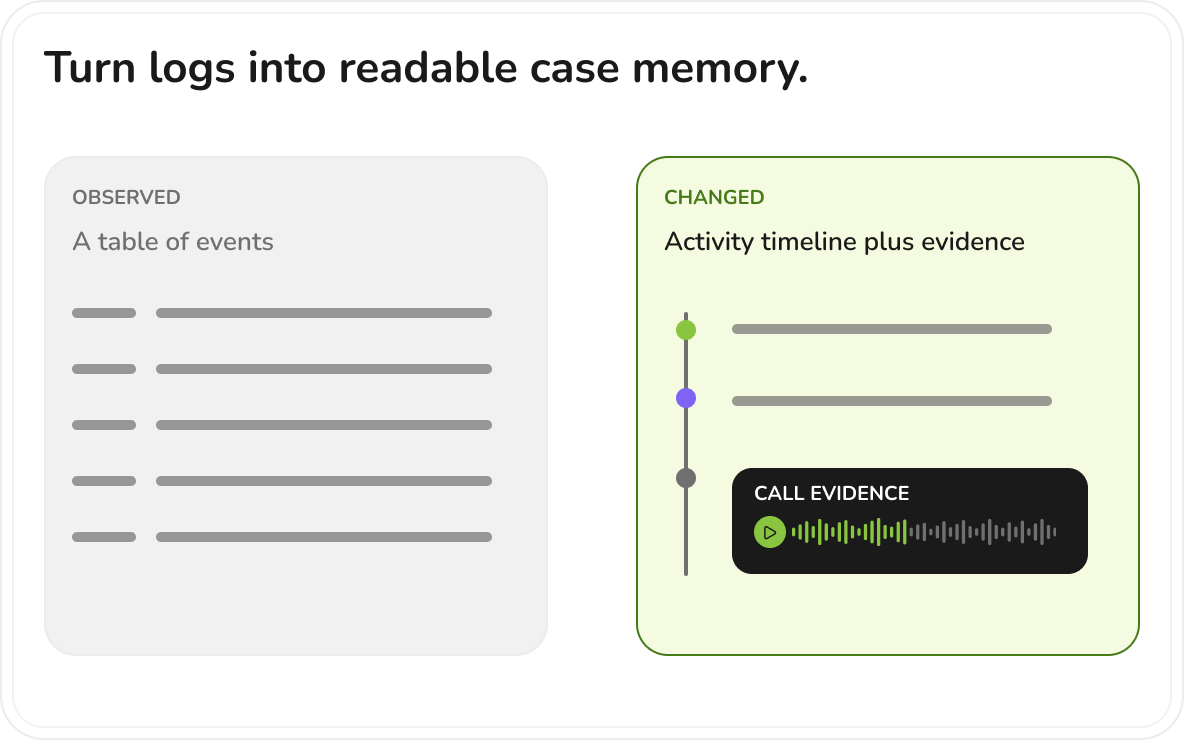
Watching people move through the work exposed practical problems. Actions disappeared below long forms, logs hid the case story, completed cards became noise, and status was too easy to miss. I changed each one in the next iteration.
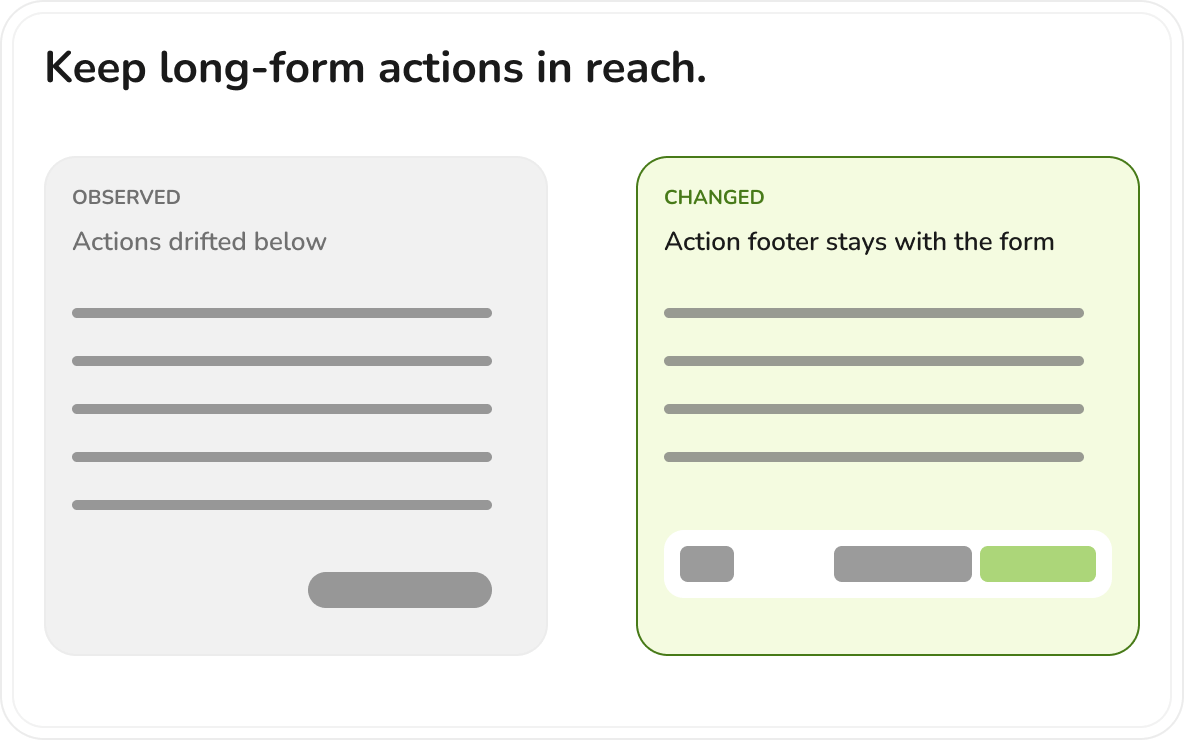
Iteration comparison showing actions drifting below a long form and an action footer kept with the form.
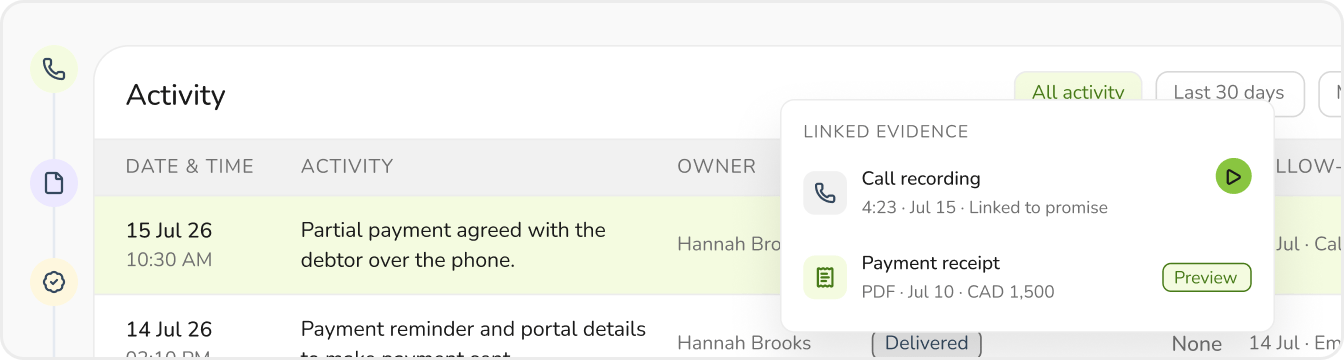
Iteration comparison showing a simple event table changed into a readable activity timeline with linked call evidence.
Iteration comparison showing a dense completed list changed into individually collapsible cards that preserve context.
Iteration comparison showing case status buried in a form and then made readable beside the case name.

Working notes

I sketched the responsibilities before the screens.

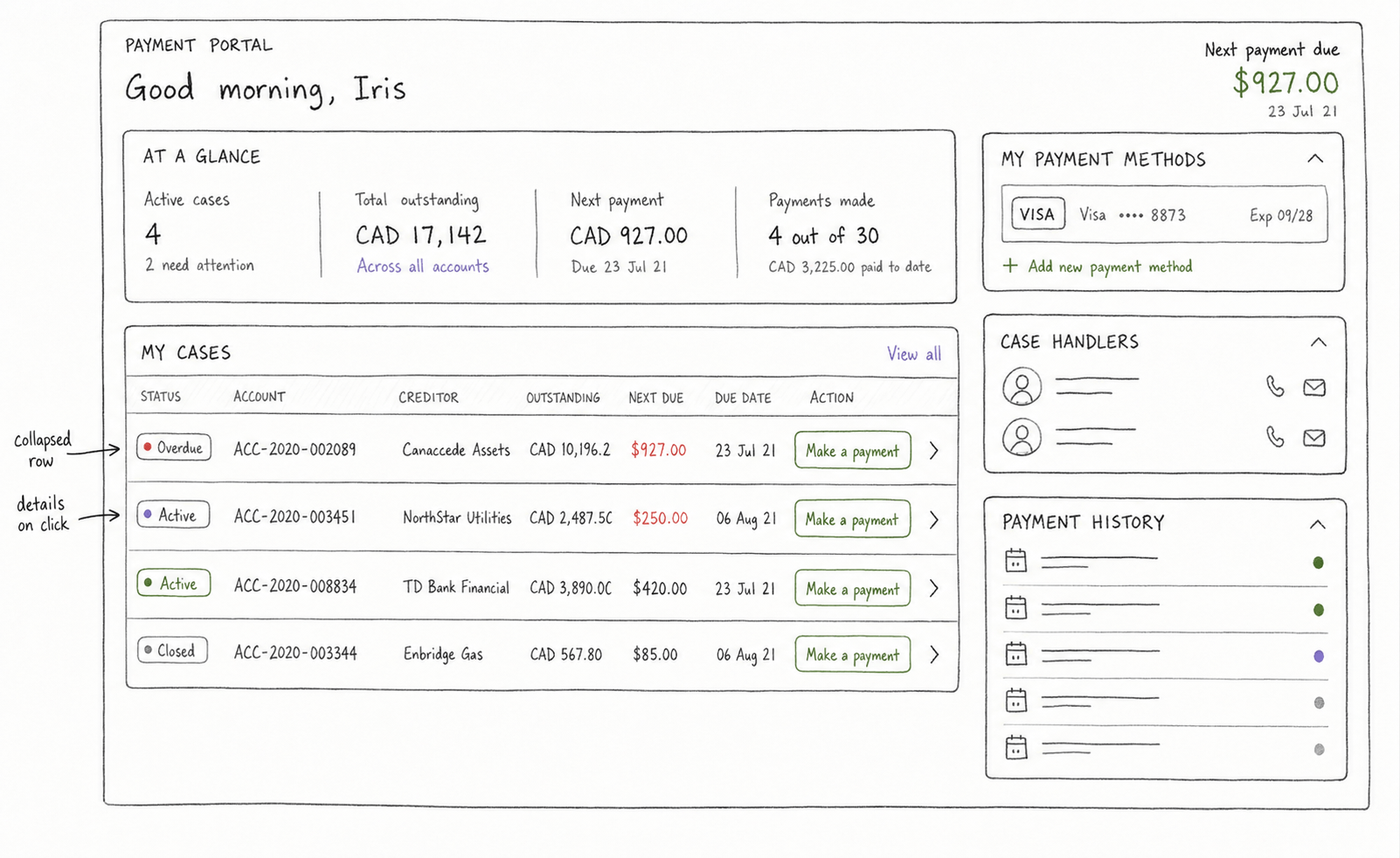
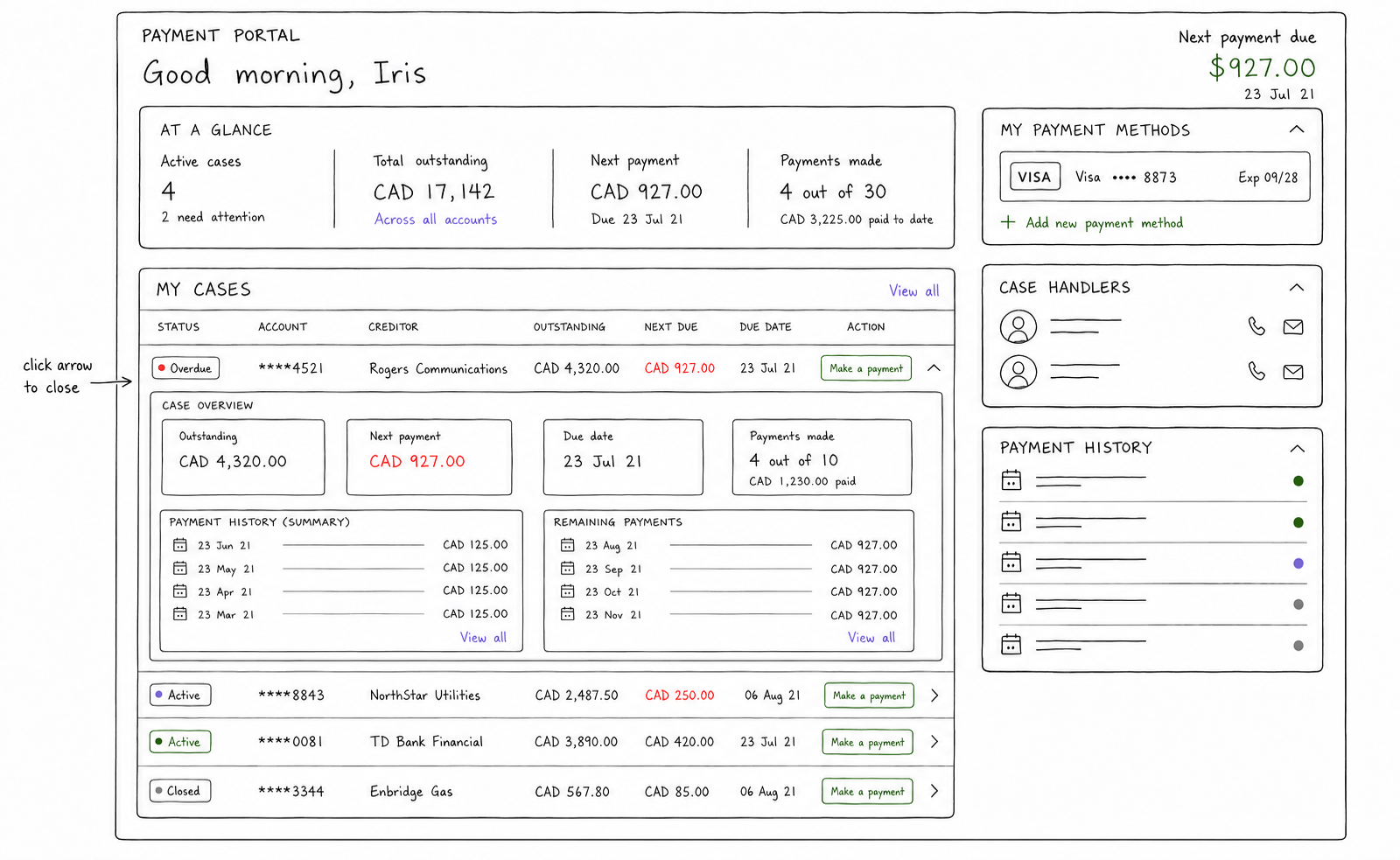
I sketched the main responsibilities first, then mapped the information architecture and debtor journey. The rough work helped the team discuss the system before polished screens made any decision feel fixed.
WIREFRAME 01

Account overview.

Hand-drawn wireframe for the NCRI debtor payment portal dashboard with cases, payment methods, and history.
WIREFRAME 02

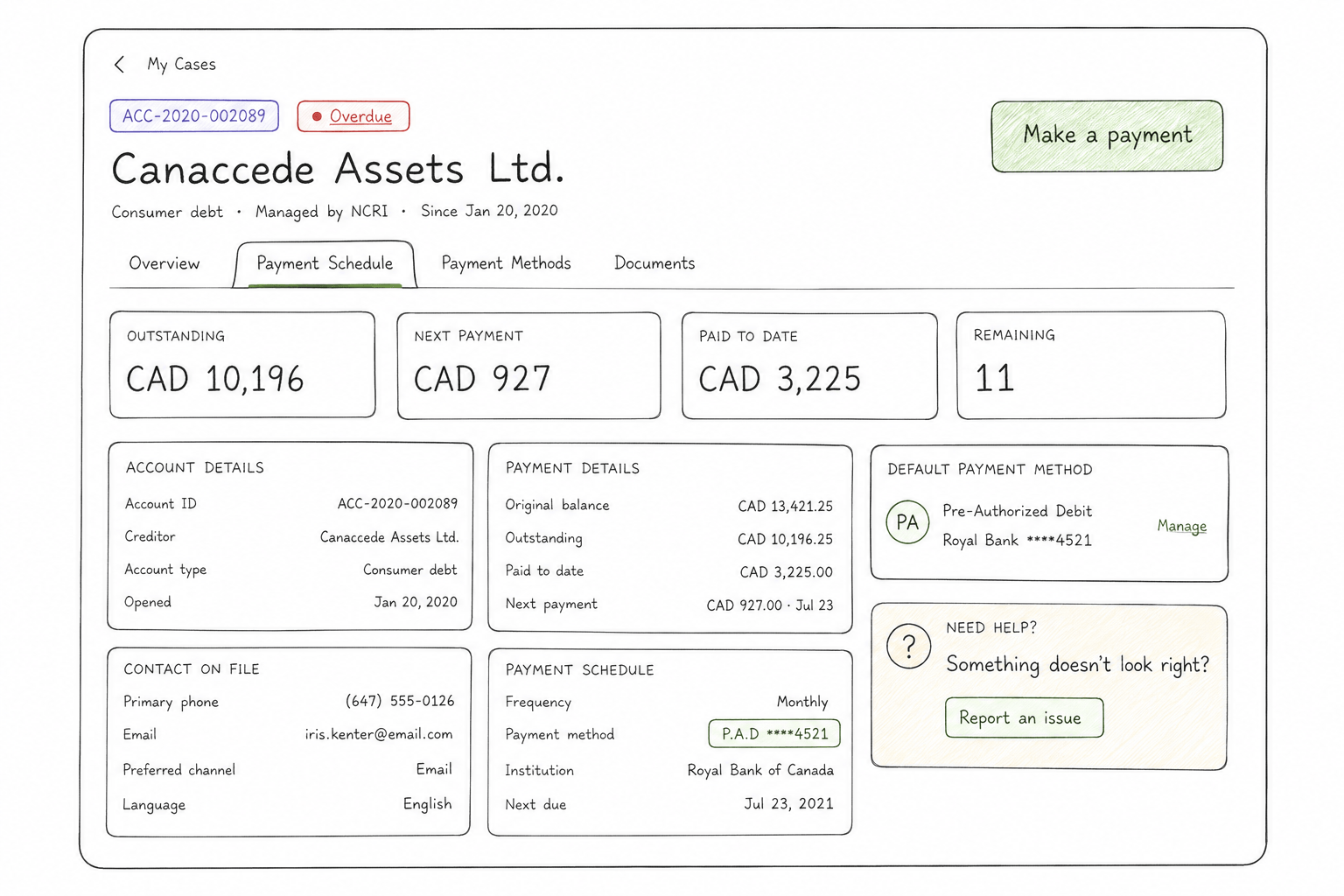
Expanded case detail.

Hand-drawn wireframe for the NCRI debtor case view with payment schedule, account details, and support.
WIREFRAME 03

Payment and recovery.

Hand-drawn wireframe for the NCRI debtor payment portal case view with payment schedule and recovery support.
INFORMATION ARCHITECTURE

Map the system before polishing it.

CUSTOMER JOURNEY

Plan for payment and recovery.

Solution chapters

Four parts of the work. One case running through all of them.

The screens differ because the work differs. The model stays consistent: ownership, next action, evidence, and money travel with the case.

Today's work

Start with today's work.

I put assigned work, urgency, and the next commitment ahead of the wider metrics. A collector should be able to open the product and know where to begin.
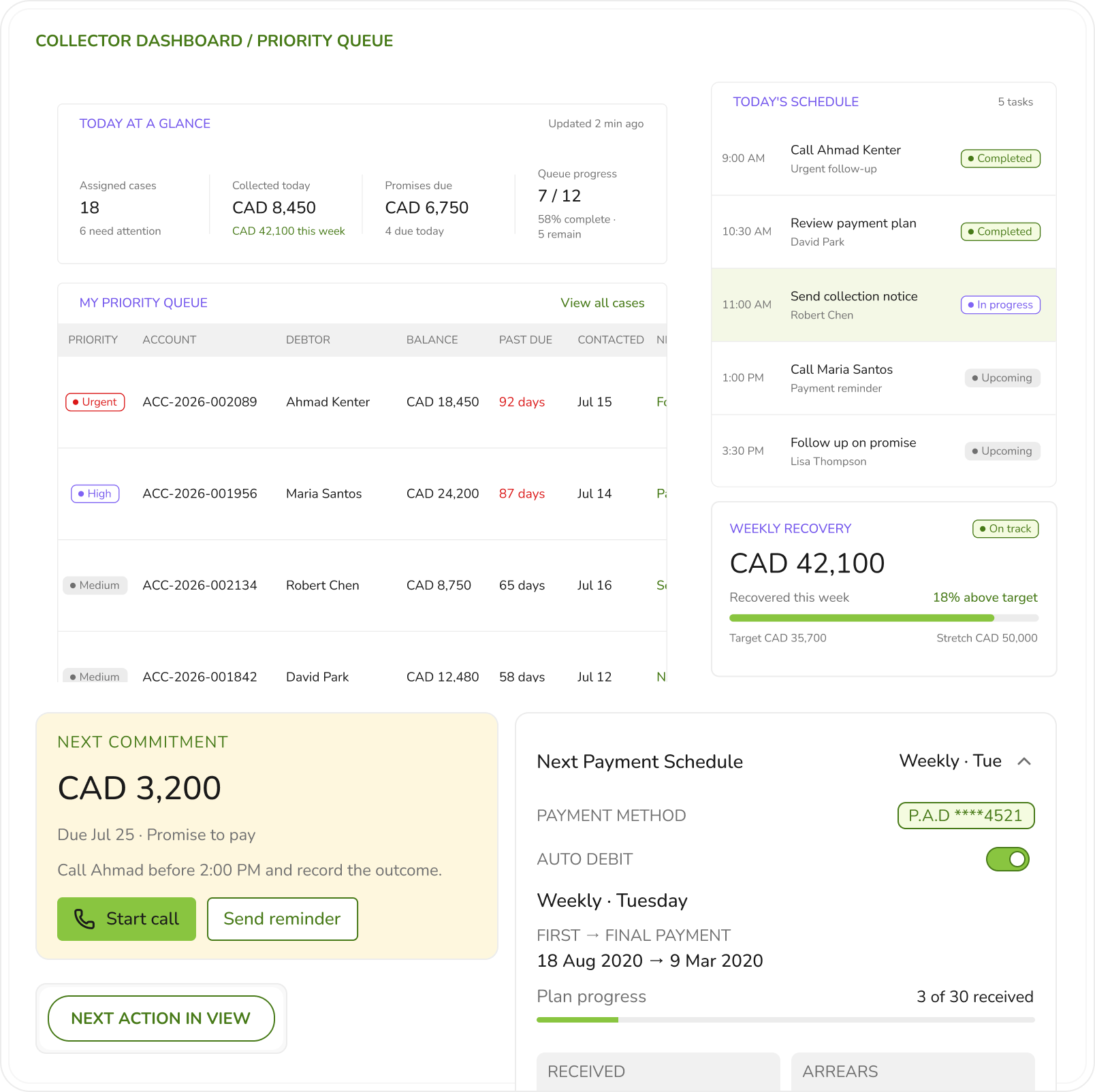
NCRI collector dashboard showing assigned cases, priority queue, today's schedule, weekly recovery, and next commitment.
Ownership, urgency, and the next commitment stay in view.

Case history

Keep the case history together.

Calls, promises, payments, evidence, and follow-up all belong to the same story. I kept them in one timeline so another collector could continue the case without rebuilding its history from separate tools.
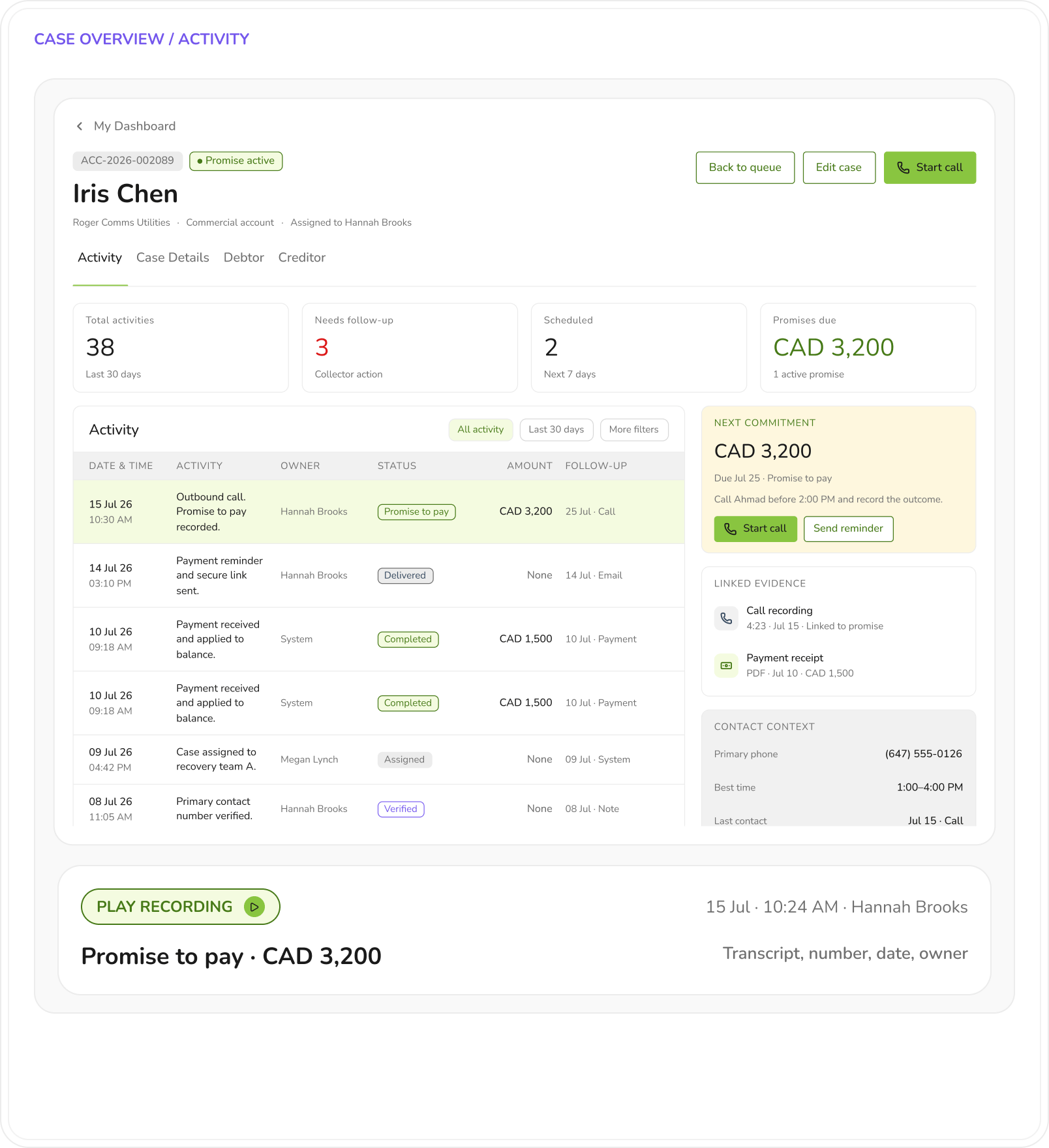
NCRI case activity view showing account history, activity status, linked evidence, next commitment, and follow-up context.
The history and the next commitment live together.

Case intake

Make long intake easier to recover.

Long intake was easy to interrupt and hard to restart. I grouped the details, kept actions close, saved progress, and surfaced possible duplicates before a new record could create more cleanup.
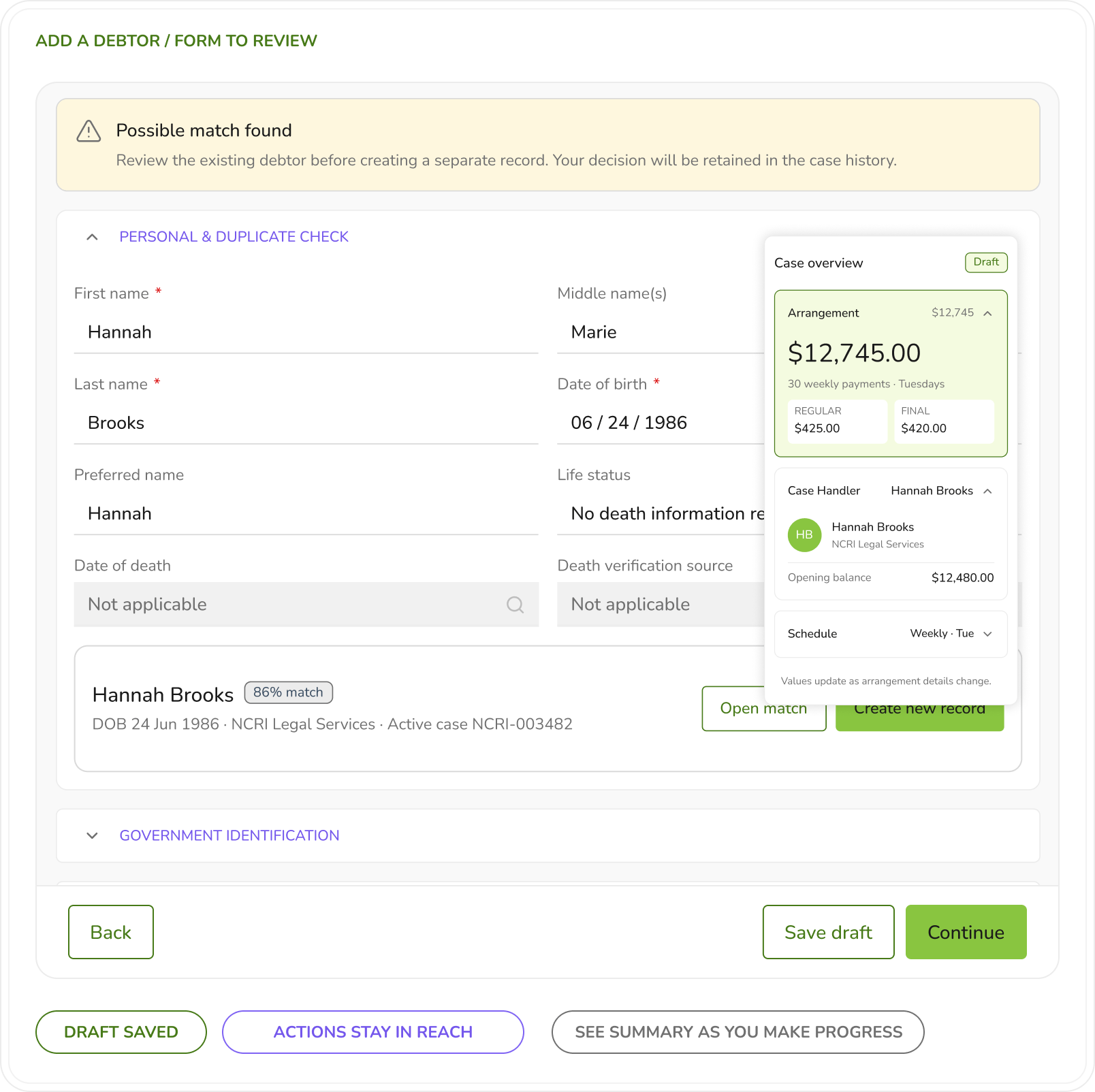
NCRI add debtor form showing a possible duplicate match, personal details, case overview, draft state, and next actions.
Grouped details and saved progress make the form easier to resume.

Money and recovery

Keep the money beside the case.

Balance, payments, recovery, and commission were part of the case, not a separate story for later. I brought them together so the team could see what changed and how the work was credited.
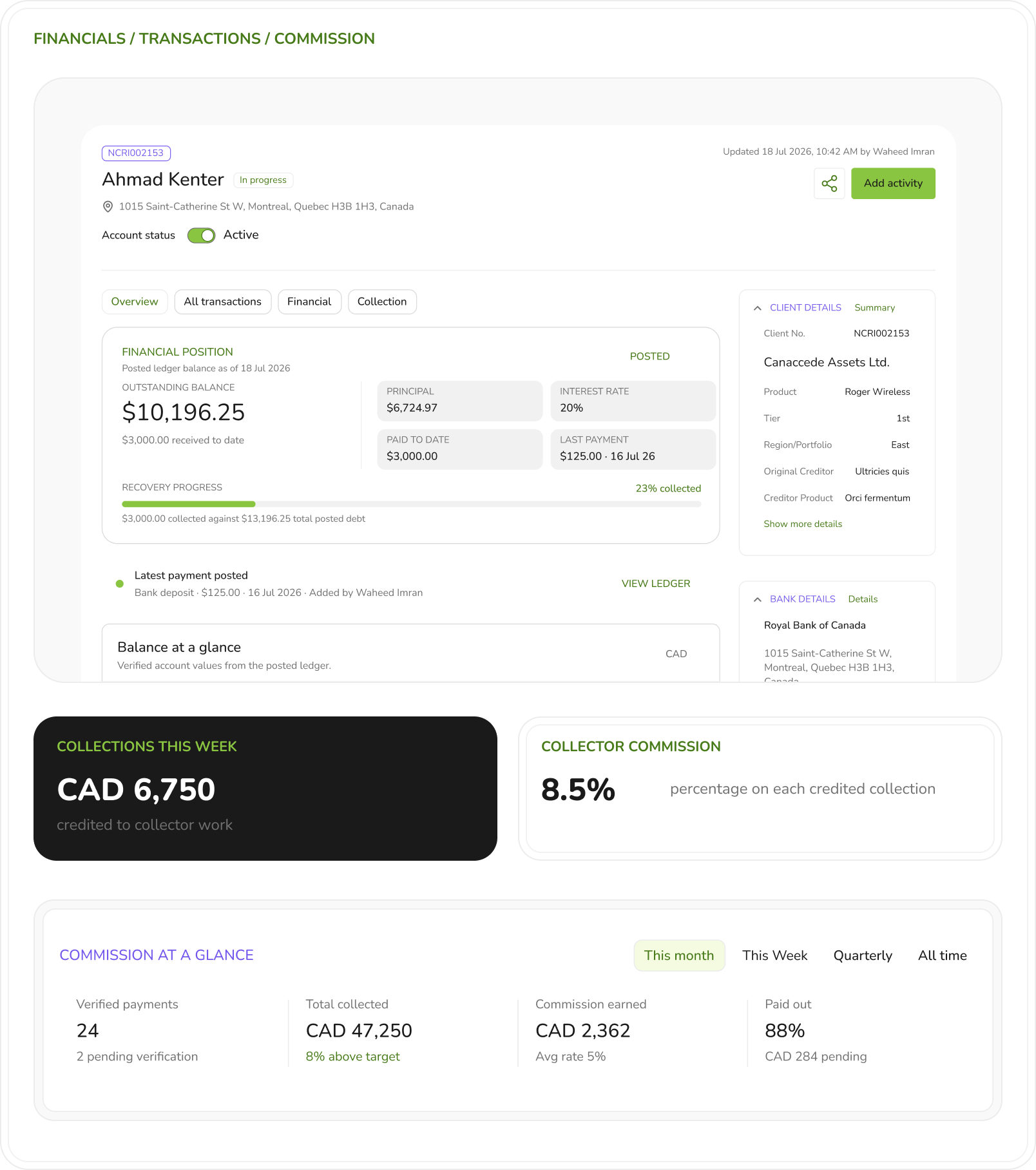
NCRI financials view showing account balance, payment history, recovery progress, client details, bank details, collections this week, and commission at a glance.
Payments and recovery stay connected to the account.

Roles and workflow

Roles and status needed rules, too.

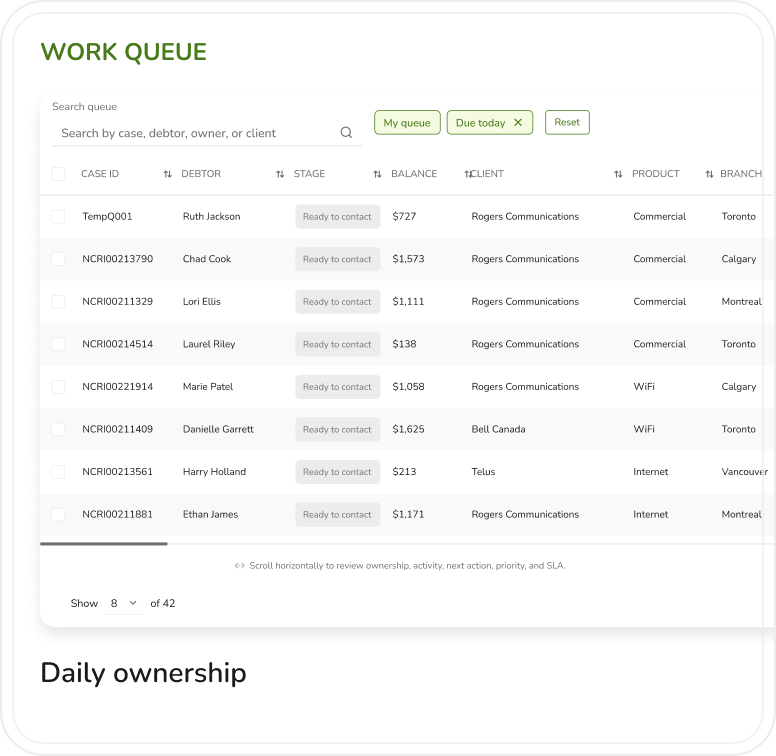
Connecting the screens was not enough. I also had to define how access, status, and ownership behaved as work moved between collectors, managers, and administrators.
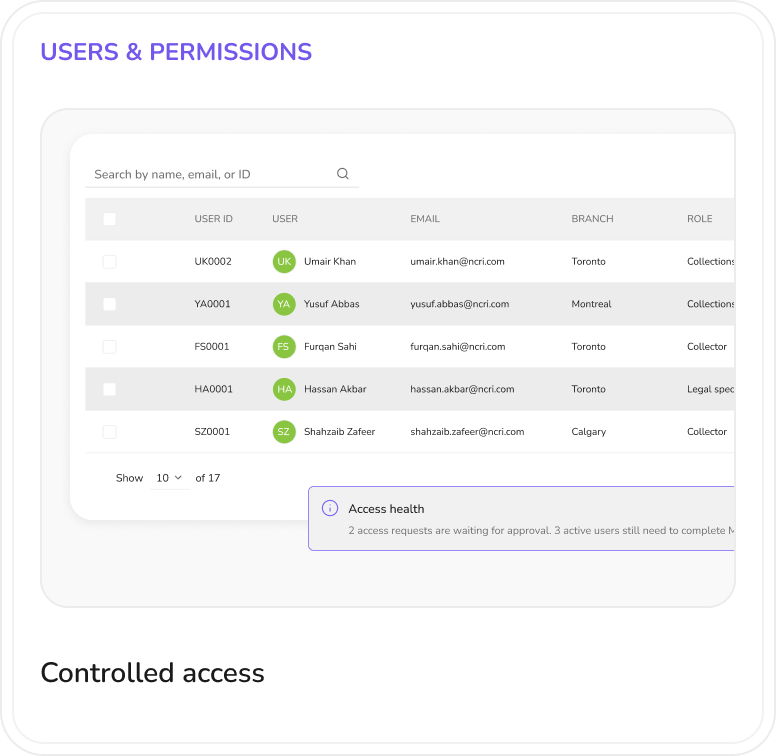
NCRI users and permissions interface showing searchable users, roles, branches, and access health.
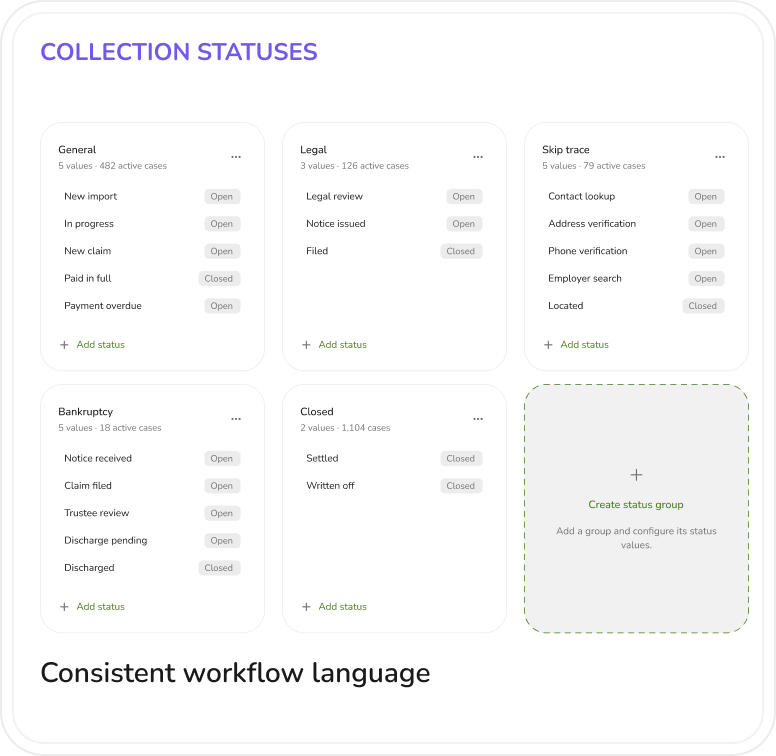
NCRI collection statuses interface showing shared status groups, case counts, and configurable workflow language.
NCRI work queue showing searchable cases, ownership, stage, balance, client, product, and branch.

Selected system pieces

I built the system as the product grew.

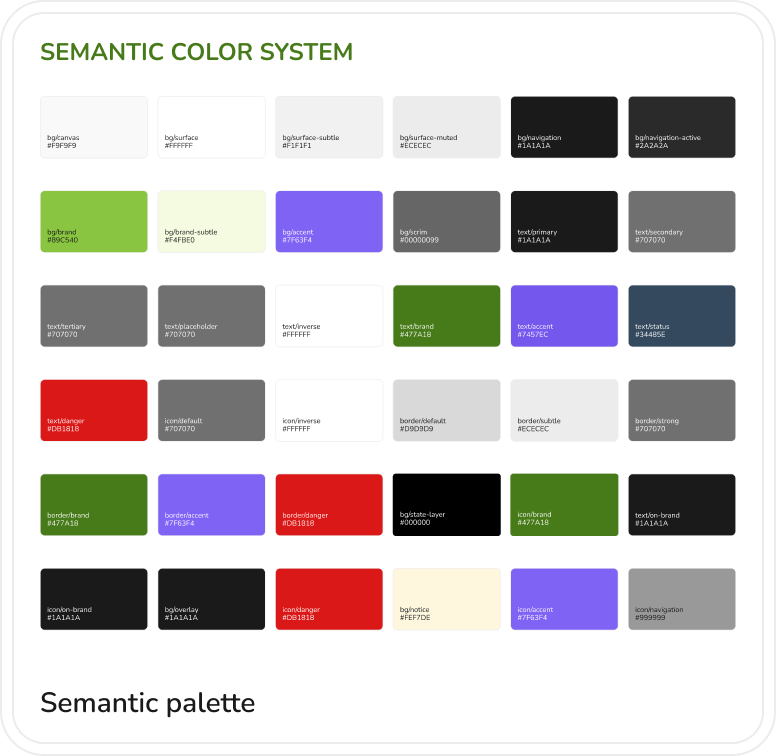
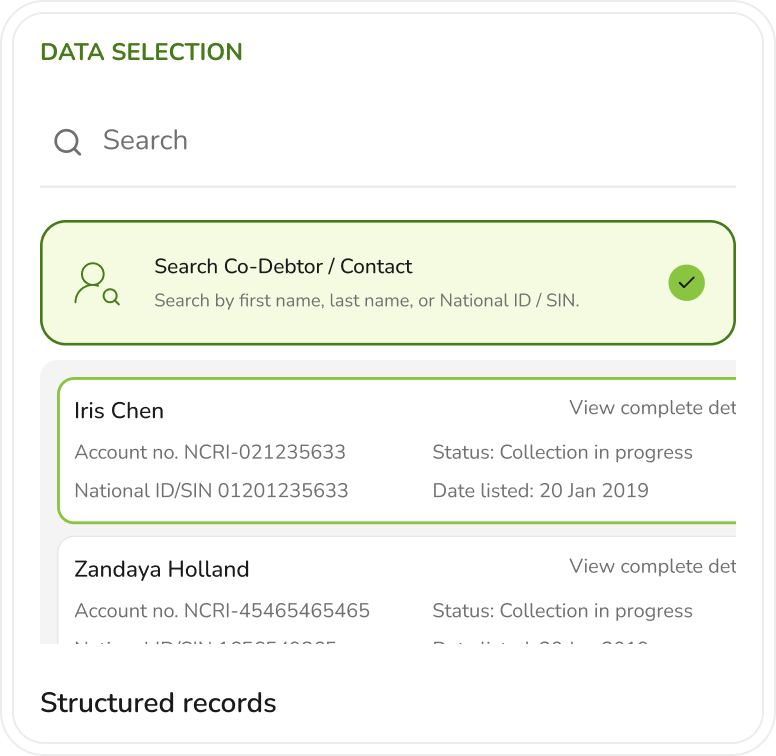
New requirements arrived while design and development were moving in parallel. The system gave us a shared set of type, color, states, actions, and interaction patterns instead of solving the same decision on every screen.
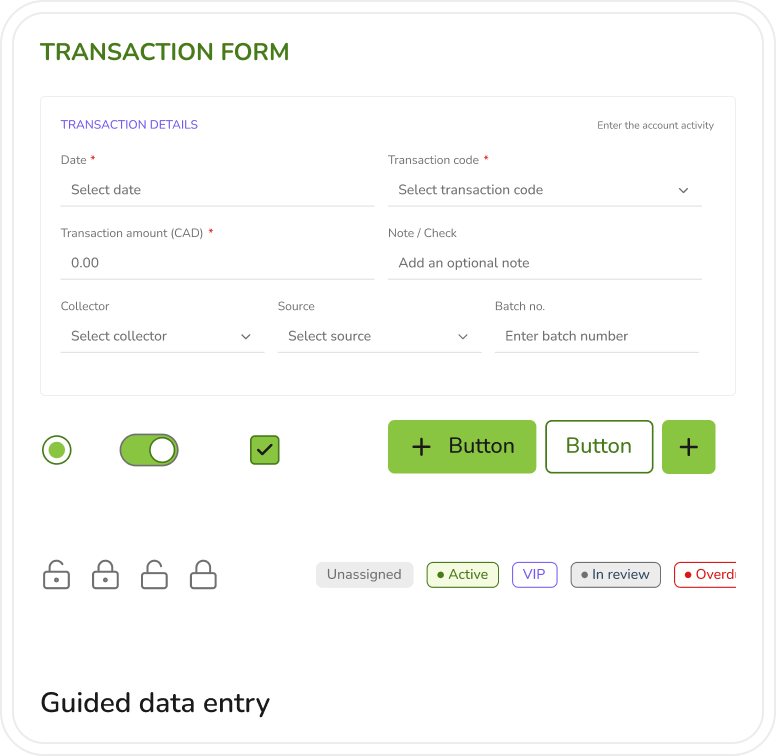
NCRI design system transaction form showing guided fields, controls, buttons, and status tokens.
NCRI design system data selection patterns showing searchable and selectable interface controls.
NCRI design system semantic color palette showing background, text, border, icon, and status tokens.
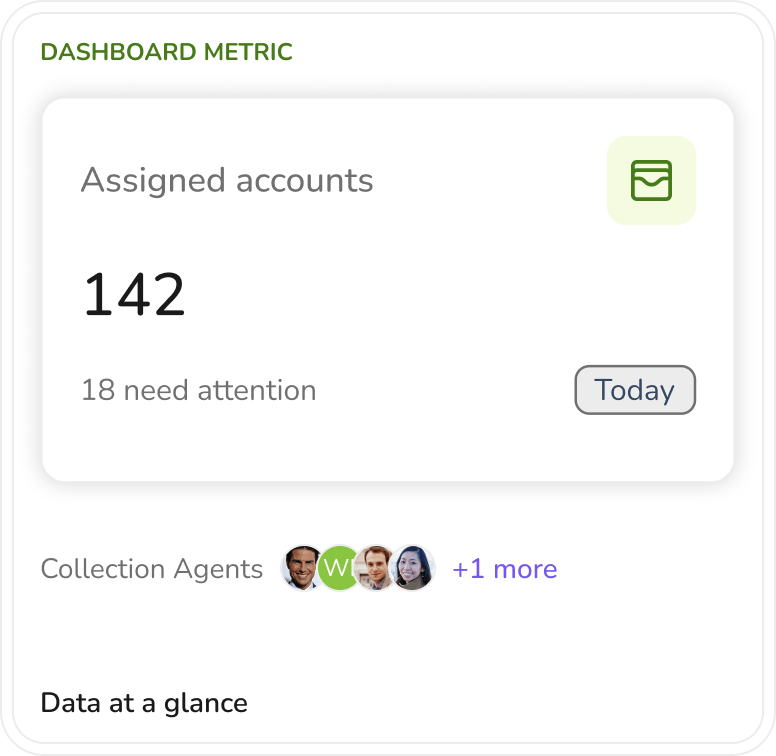
NCRI design system dashboard metric patterns showing data hierarchy and operational status.
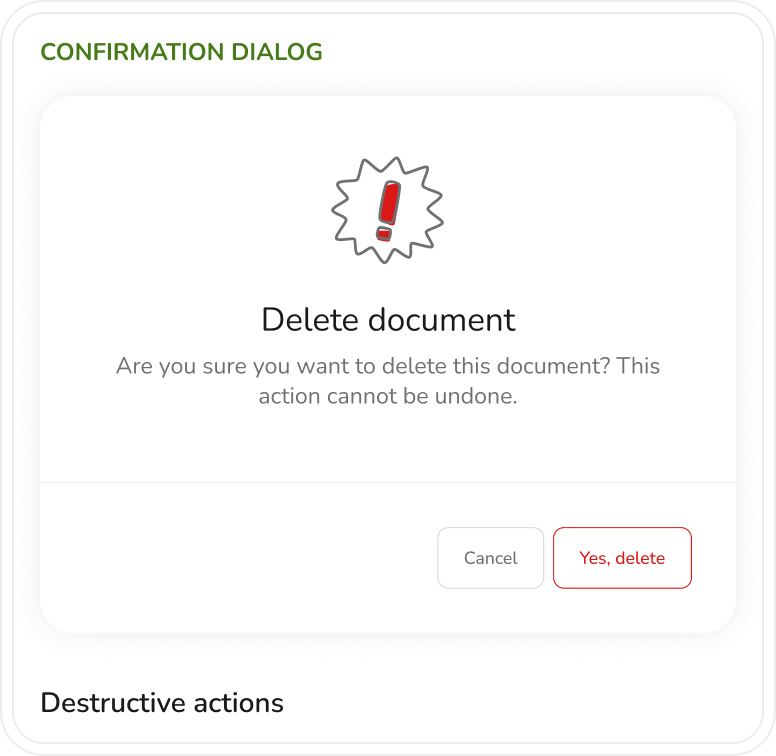
NCRI design system confirmation dialog pattern for consequential actions.
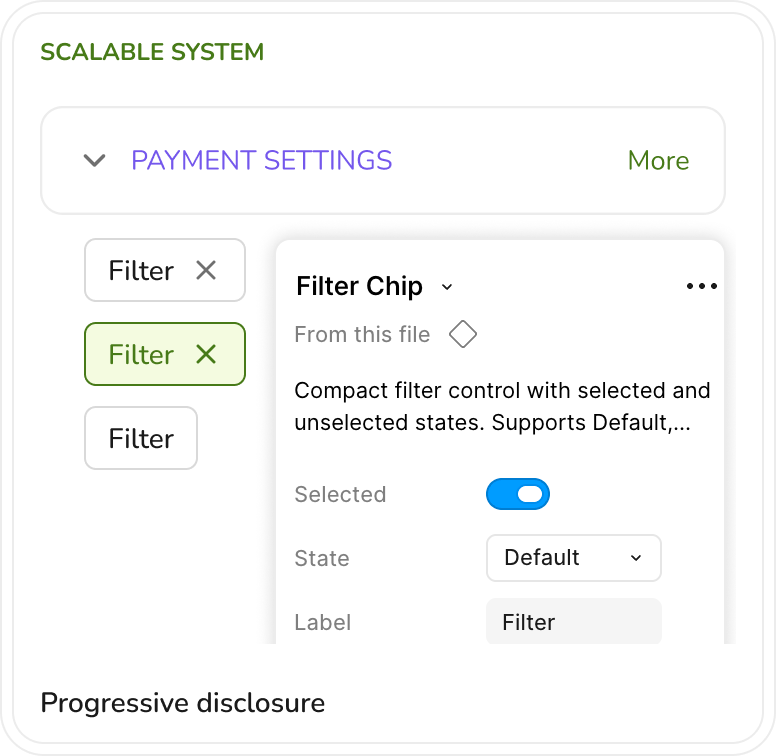
NCRI design system search flyout pattern showing progressive disclosure and filter states.

Across the product

The model had to hold across the product.

These surfaces show how the same model carried into case work, debtor self-service, intake, evidence, statuses, and team setup.

CASE WORK

Keep the case in view.

Account context, next action, activity, and balance stay together.

DEBTOR PORTAL

Make the account understandable.

The person paying can see what is due, what has happened, and what comes next.

INTAKE

Make long work safer.

Defaults, grouped details, and saved progress keep a complex case moving.

EVIDENCE

Trace the work to the money.

Payment evidence stays connected to the case and its verification state.

WORKFLOW

Give the system a shared language.

Status groups make progress legible across teams, portfolios, and case states.

TEAM SETUP

Make ownership explicit.

Teams, branches, portfolios, and coverage can be managed before work is routed.

Closing note

The work was unfinished. The direction was clear.

I joined at the first meeting and stayed close as design and development moved together. Requirements sometimes changed overnight. I learned to keep the product model steady while letting the screens move.

I left NCRI for another opportunity before the platform was finished. I handed the flows, screens, and design system forward. I would rather say that plainly than turn unfinished work into a launch story.

NCRI was my first corporate role. It taught me to look for the messy handoff, repeated workaround, or question people have stopped asking. That is often where the real product begins.

  • 01

    Following the work was more useful than starting with a feature list.

  • 02

    A case history only helps when calls, promises, ownership, and payments stay together.

  • 03

    The design system had to carry operational meaning, not just visual consistency.

  • 04

    If I continued the project, I would record task outcomes for the debtor and manager flows.

Back to selected work